This content is password-protected. To view it, please enter the password below.
This content is password-protected. To view it, please enter the password below.
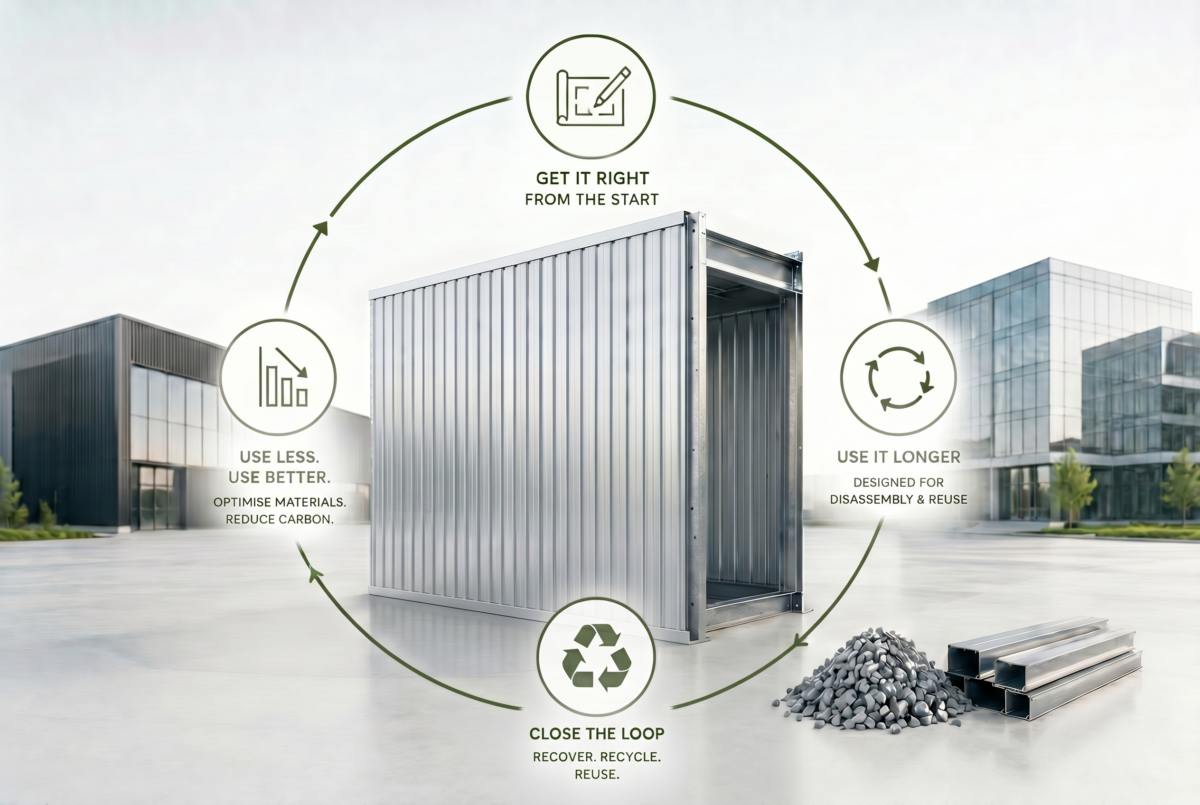
As the construction industry works to reduce embodied carbon, much of the conversation focuses on selecting lower-carbon materials. While material choice certainly matters, one of the biggest opportunities often comes much earlier in the process: designing buildings that simply require less material.
Recent industry discussion, including BRANZ’s work on Whole of Product Thinking, reinforces this shift in thinking. Embodied carbon isn’t just determined by what products are made from—it’s also influenced by how much material is needed to deliver the required performance. At KOROK, reducing material demand begins with smarter system design.
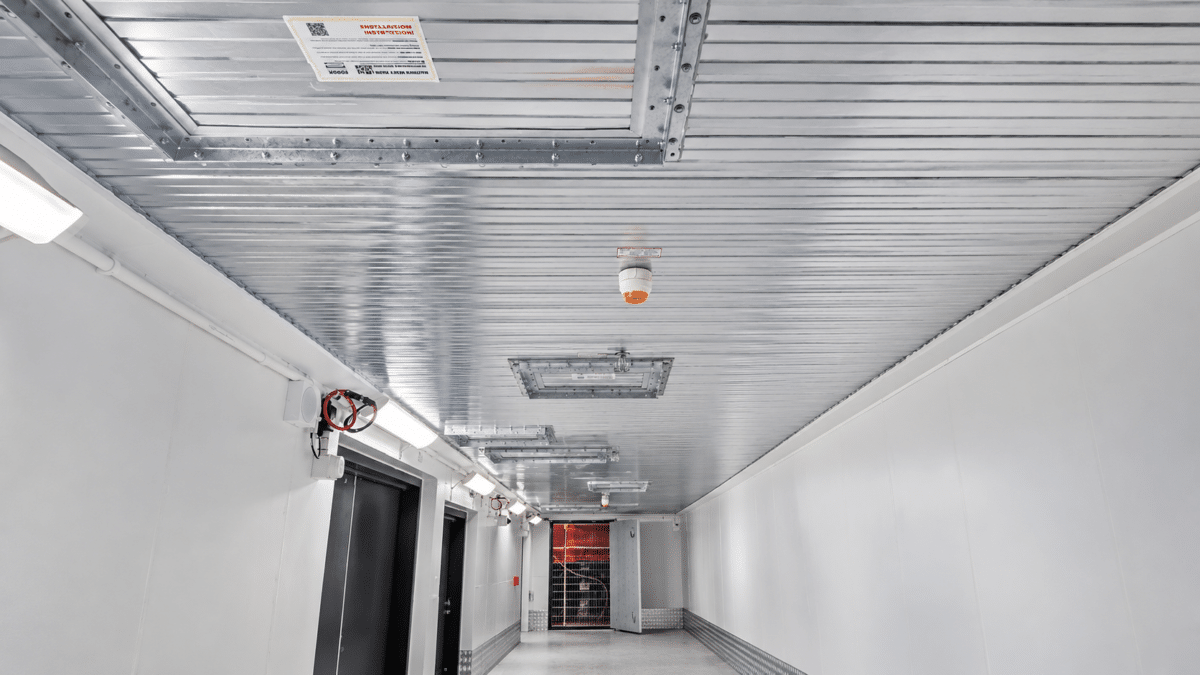

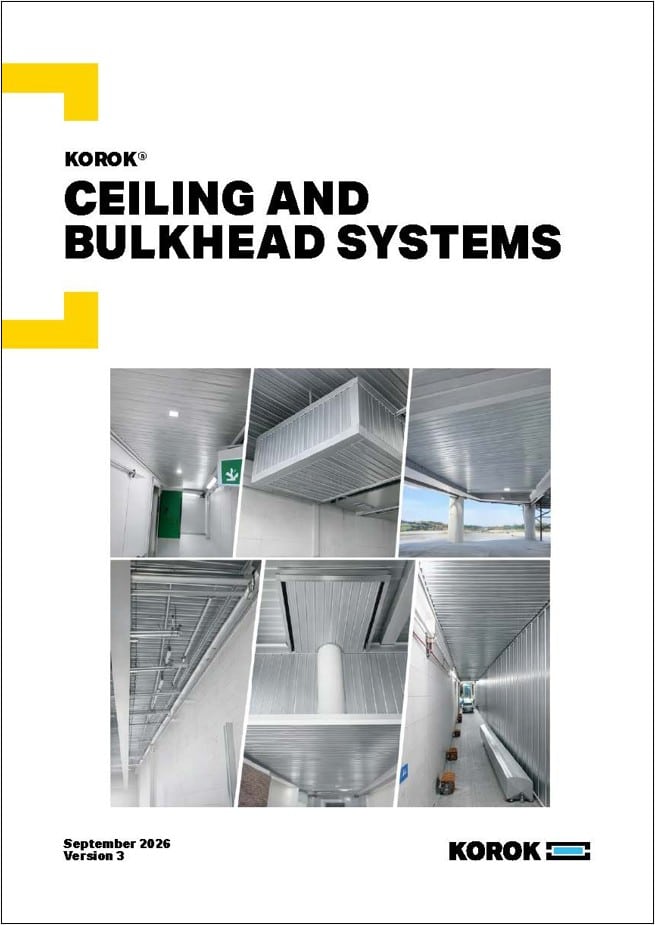
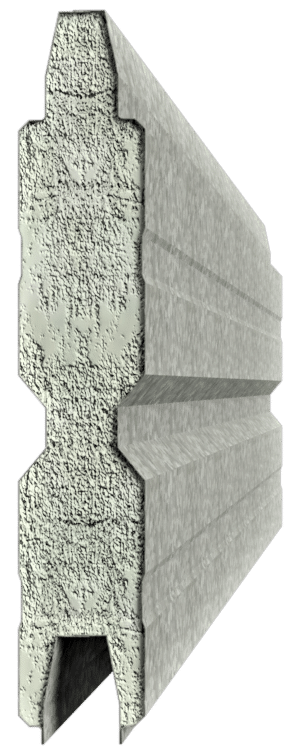
KOROK® Ceiling & Bulkhead Systems provide a smarter, more efficient approach to fire-rated ceiling construction for commercial, industrial, and infrastructure projects. Utilising KOROK® 78mm panels, these systems are designed to simplify fire continuity while enabling fast underside installation with Fire Resistance Ratings of up to -/120/120.
Developed to address the practical challenges faced on modern construction sites, KOROK® systems are ideal for service-heavy environments, restricted-access ceiling spaces, and complex construction sequencing. The lightweight panel design helps reduce installation complexity, minimise disruption to other trades, and improve overall site efficiency.
Conventional fire-rated ceiling and bulkhead systems can create unnecessary challenges around ceiling plenums, service coordination, access limitations, and installation sequencing. In many cases, traditional systems require additional linings to be installed from above, increasing labour, programme time, and coordination requirements. KOROK® Ceiling & Bulkhead Systems simplify this process.
Designed specifically for installation from the underside, KOROK® systems reduce reliance on roof-space access while supporting efficient programme sequencing for new builds, retrofit projects, and staged construction works.
The symmetrical profile of the KOROK® 78mm panel allows seamless integration with KOROK® fire-rated wall systems, concrete/masonry, and structural steel elements. By utilising compatible KOROK® wall and ceiling systems together, fire continuity can be maintained without overcomplicating details or requiring excessive additional ceiling linings.
All KOROK® panel tasting has been carried out at nationally accredited laboratories to AS1530: Part 4, providing designers, engineers, and contractors with confidence in system performance and compliance. Keep it simple with lightweight, code-compliant KOROK® systems designed to work together to meet demanding fire and acoustic performance requirements.
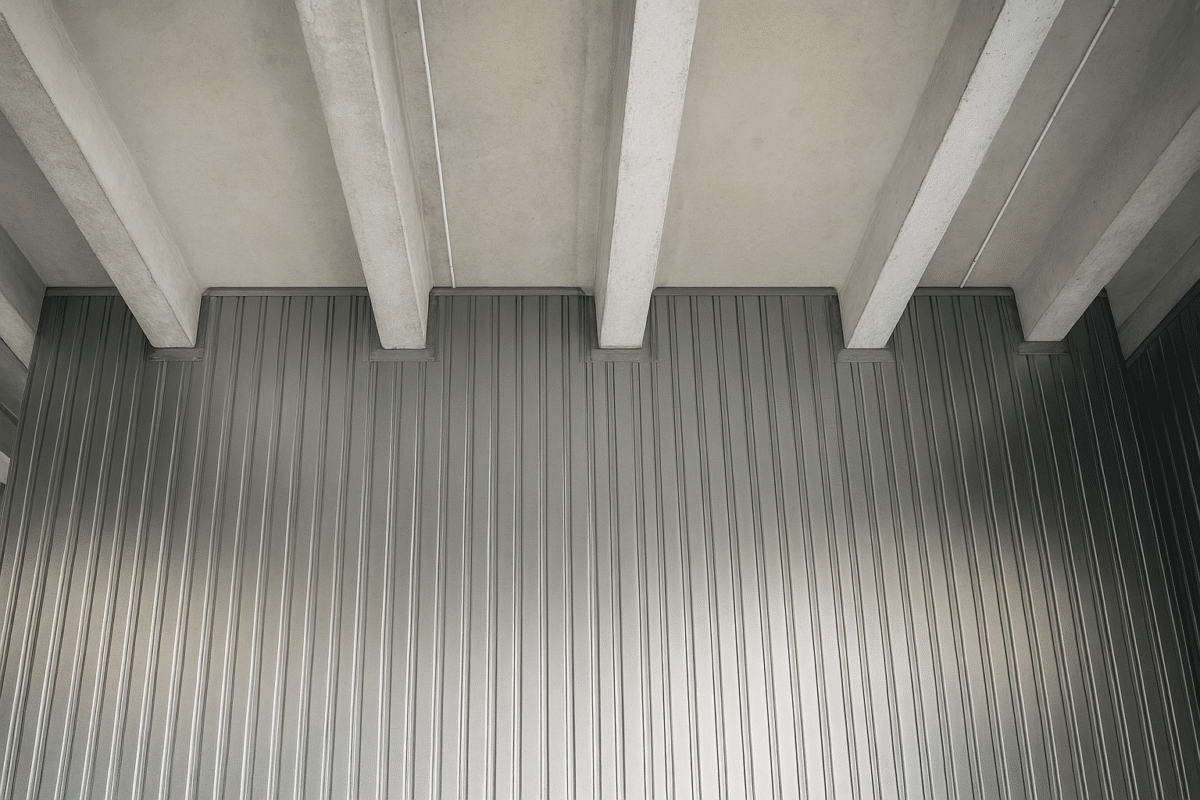
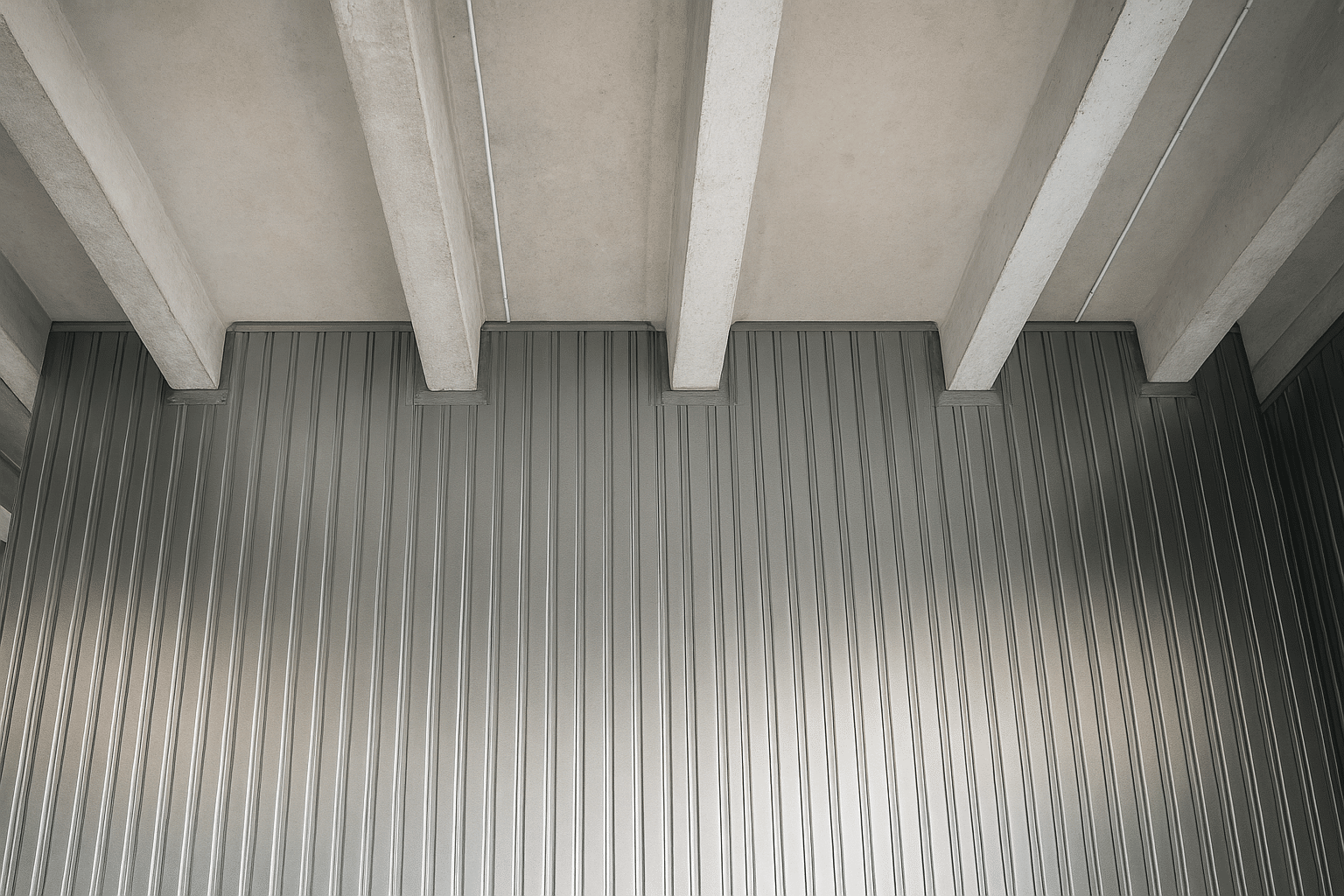
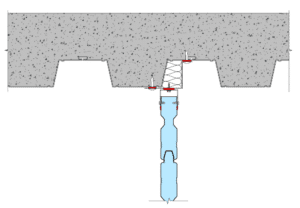
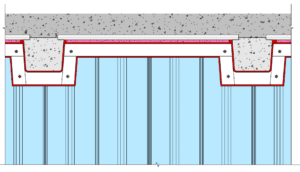
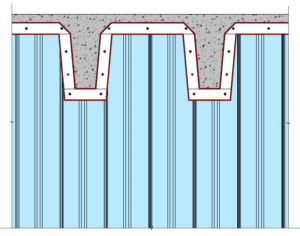
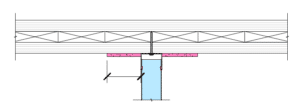
Created to support today’s complex building designs, KOROK® has developed a series of Floor Junction Details that strengthen, clarify, and enhance how KOROK® walls interface with modern floor construction, where fire performance matters most.
As building designs and structural systems evolve, KOROK® developed Floor Junction Details to strengthen existing requirements, increase technical clarity, and deliver more comprehensive CAD documentation – supporting accurate specification, smoother construction outcomes, and greater confidence from concept through consent and construction.
In modern construction, fire performance is only as strong as the weakest interface. Unresolved wall-to-floor junctions can compromise fire separation, increase risk, and create uncertainty at design review or consent stage. KOROK® addresses this directly, ensuring continuity of fire cells where walls meet:
These assessed solutions remove ambiguity and support compliant detailing across a wide range of building typologies.
KOROK® Floor Junction Details are supported by a formal engineering assessment, delivering verified fire performance aligned with regulatory expectations.
Designed with practical construction and coordination in mind, KOROK® Floor Junction Details provide flexibility without sacrificing compliance. These engineered solutions accommodate:
This allows engineers and architects the freedom to resolve complex interfaces while maintaining fire performance continuity.
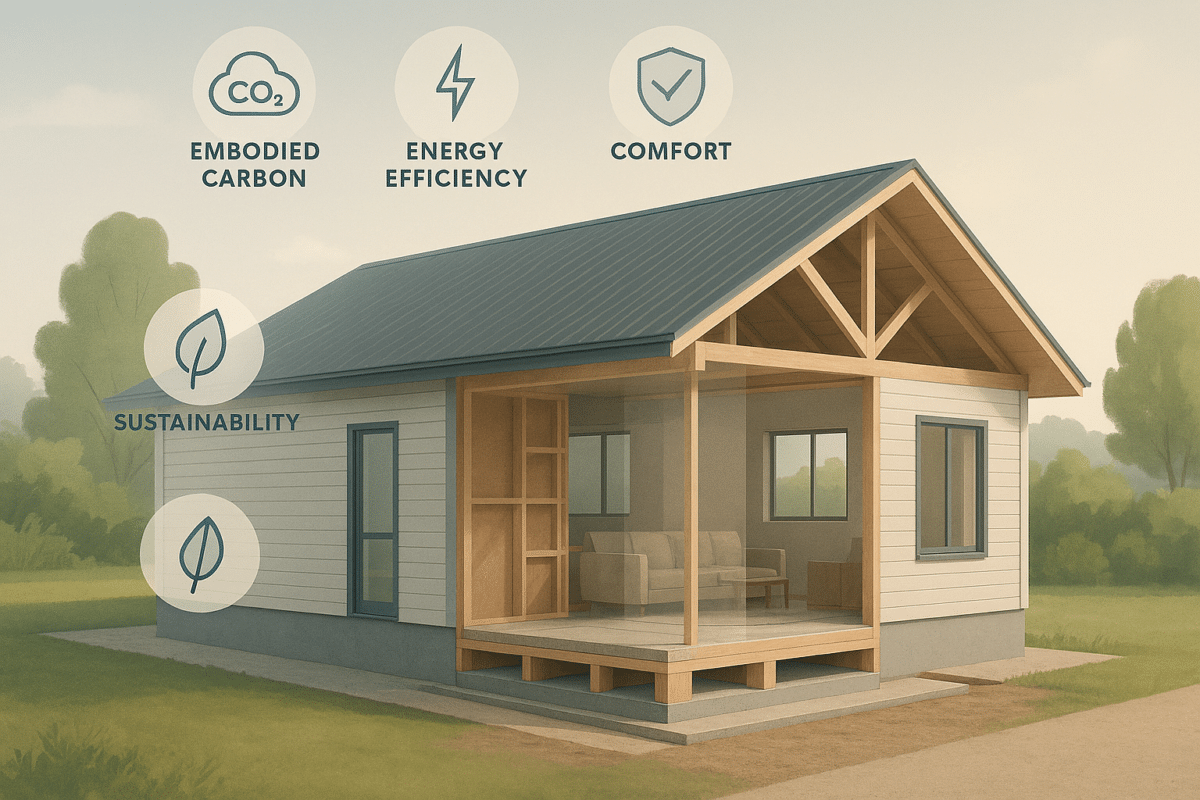
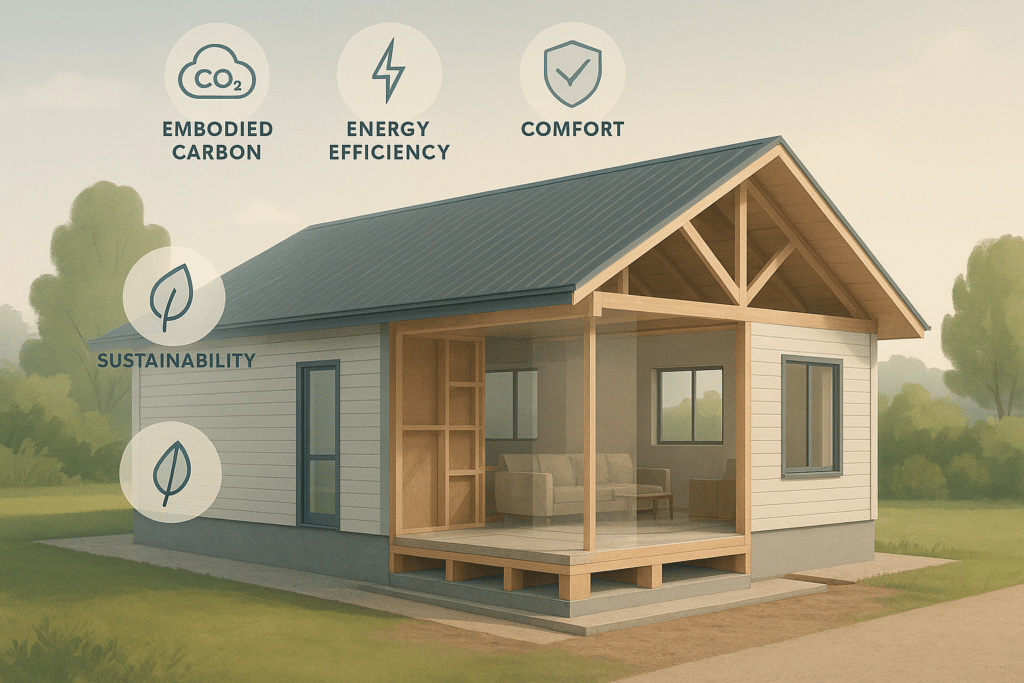
Designers today have better tools than ever to understand how their choices affect a home’s energy use and carbon footprint. With embodied carbon and operational energy now able to be assessed early in design, materials are no longer just a specification detail – they are a performance decision.
Material choices made early in the design process have a significant influence on a home’s overall performance. Choosing solutions that are efficient, well‑designed, and suited to modern construction workflows can deliver benefits across comfort, cost, and emissions over the life of a building.
At KOROK, we see this as a positive step forward for the industry. As performance modelling becomes standard practice, smarter wall systems help designers and builders turn sustainability targets into practical, buildable outcomes – right from concept stage.
Further reading:
This article was inspired by recent industry discussion on accessible carbon and energy modelling. You can read the original article from BRANZ and the New Zealand Green Building Council here: Carbon and energy calculation that’s accessible for designers – BRANZ
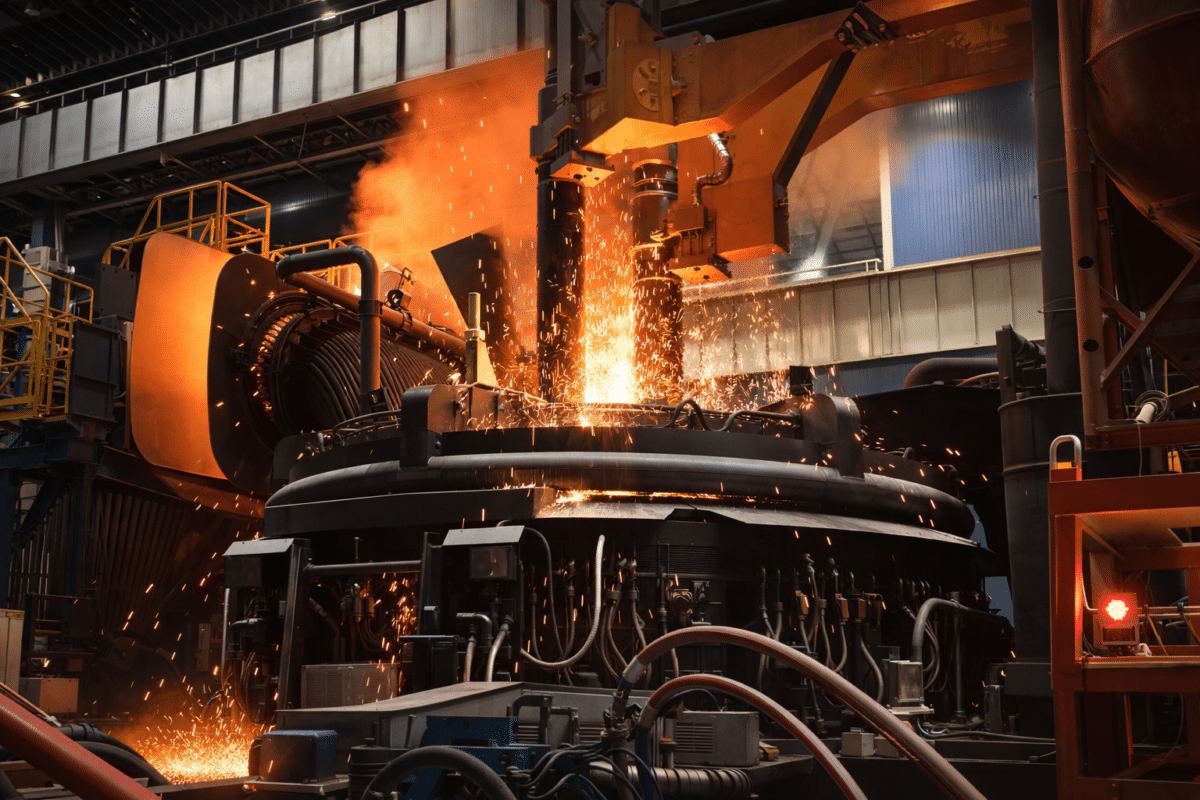
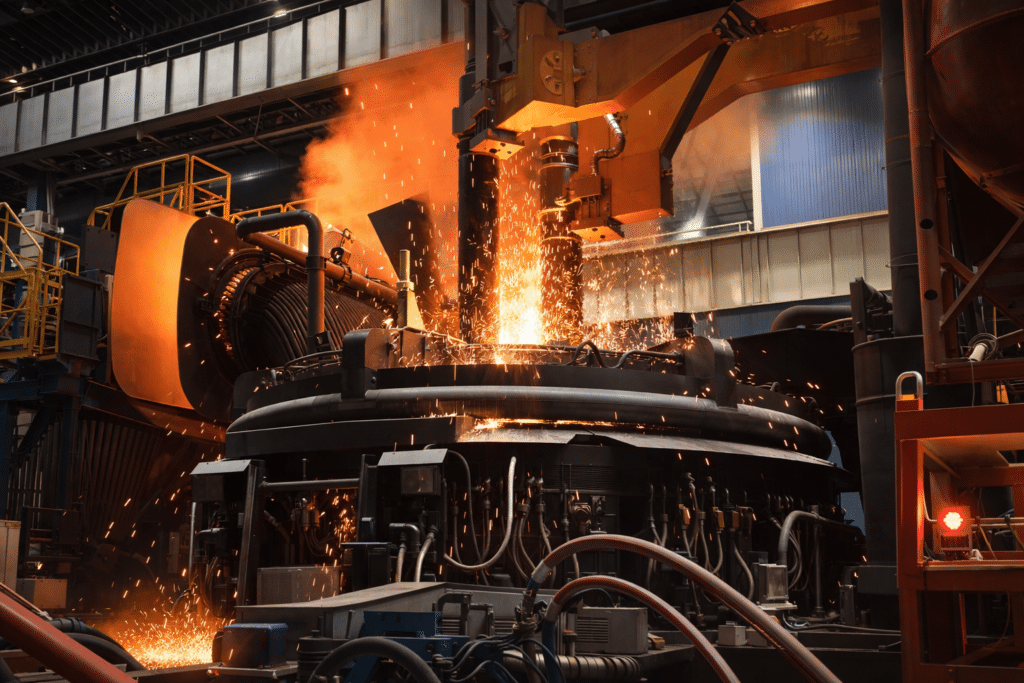
NZ Steel is commissioning a new Electric Arc Furnace (EAF) to replace the current coal‑based steelmaking process. This technology significantly reduces emissions because it uses electricity rather than coal as the primary energy source. Commissioning is expected to be complete by the end of 2026.
The change is expected to reduce the carbon footprint of NZ‑made steel by around 50%. Since the steel component represents the majority of the embodied carbon in KOROK® panels, this will dramatically reduce the carbon footprint of our product without any change to product performance or specification.
Steel is one of the most recyclable materials used in construction. It can be recycled indefinitely without loss of quality or structural performance.
This means the steel used in KOROK® panels can be recovered and reused repeatedly, supporting circular economy principles and reducing demand for new raw materials.
The primary materials used in KOROK® panels—steel and concrete—are both known for their durability and long service life.
Concrete structures can last for many decades and often well over a century. Steel maintains its structural properties over time and can be recycled at the end of a building’s life. Because KOROK® panels are made from these long‑lasting materials, they contribute to buildings that require fewer replacements and less material use over time.
KOROK® panels can also be deconstructed and reconstructed rather than simply demolished. This allows materials to be reused in future building projects.
Designing buildings with components that can be reused helps reduce construction waste and extends the lifecycle of building materials.
Sustainability is not only about reducing carbon emissions—it is also about ensuring products perform reliably throughout the life of a building.
KOROK® panels are widely used because they provide exceptional fire and acoustic performance. Products that protect buildings from fire and control noise for decades without needing replacement contribute strongly to long‑term sustainable construction.
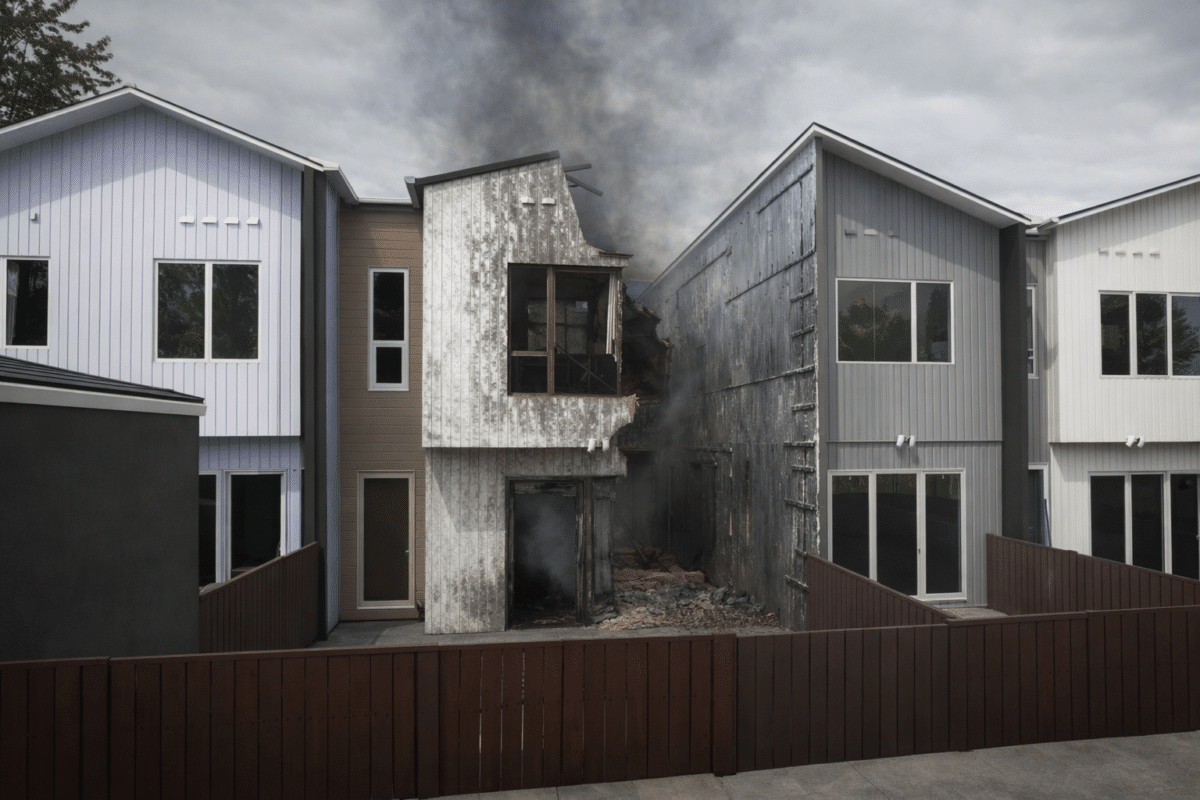

Multi‑unit residential projects deserve solutions that deliver absolute clarity, certainty, and performance. That’s exactly what the KOROK® Intertenancy Wall System provides. Proudly NZ‑made and BRANZ appraised, it’s engineered to strip away complexity, accelerate construction programmes, and give your team confidence from the very first design decision through to final completion. With clean, predictable onsite installation and consistently reliable fire and acoustic performance, the system transforms intertenancy from a pain point into a proven advantage.
Our new video showcases just how much faster, easier, and more predictable intertenancy can be across apartments, terraced housing, hotels, retirement villages, and mixed‑use developments.
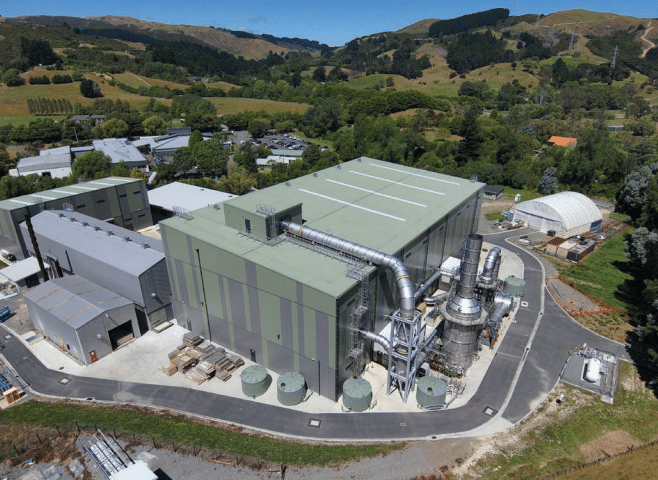
BRANZ’s latest BUILD magazine article, “Burning for better outcomes”, highlights why understanding fire behaviour at a full-scale, real-world level is so critical to safer buildings.
The new BRANZ fire laboratory allows entire building systems – not just individual components — to be tested as they would perform in reality. This shift is essential in understanding how fire and smoke move through complex, multi-storey buildings and in helping prevent future tragedies.
This systems-based approach strongly aligns with how we work at KOROK. Our fire and acoustic wall systems are tested in the BRANZ fire laboratory as part of the BRANZ Appraisal process, giving designers, builders and building owners confidence that performance is proven at scale – not assumed.
We’re proud to work closely with BRANZ and to support the ongoing advancement of fire science that helps raise the benchmark for building safety across Aotearoa New Zealand.
📖 Recommended read: “Burning for better outcomes” – BUILD magazine, Issue 207
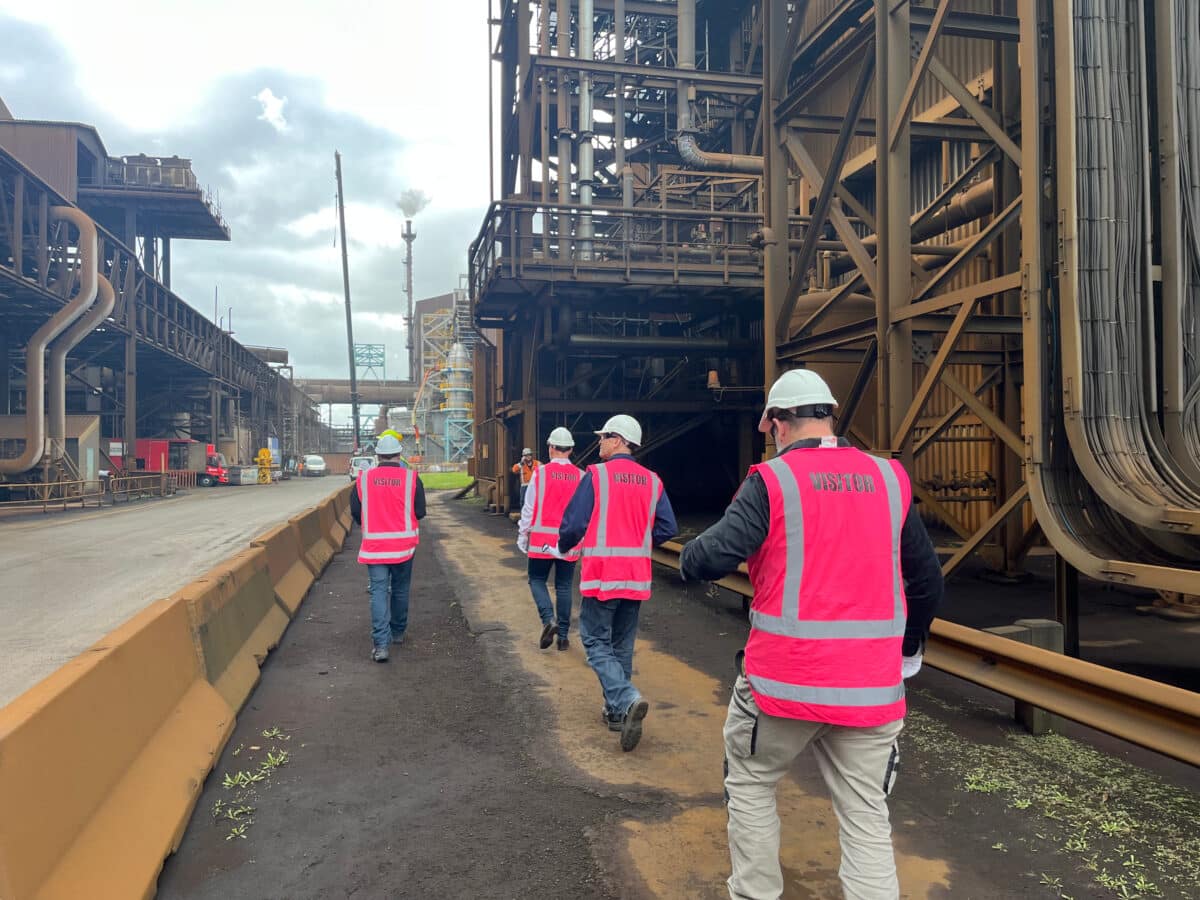
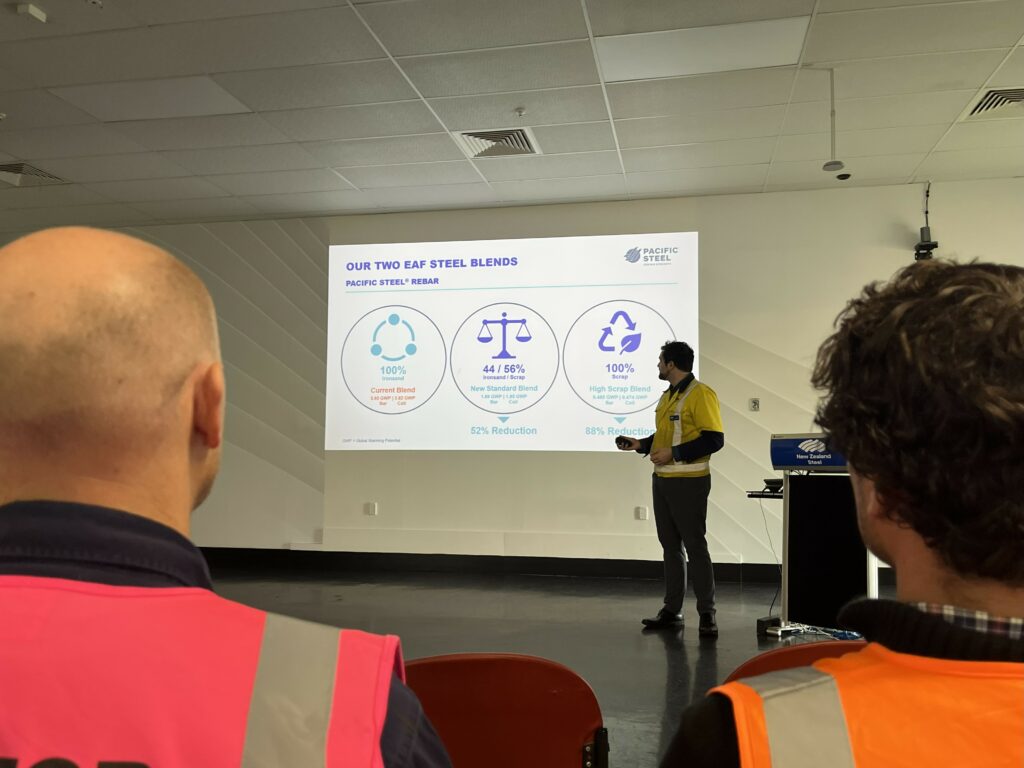
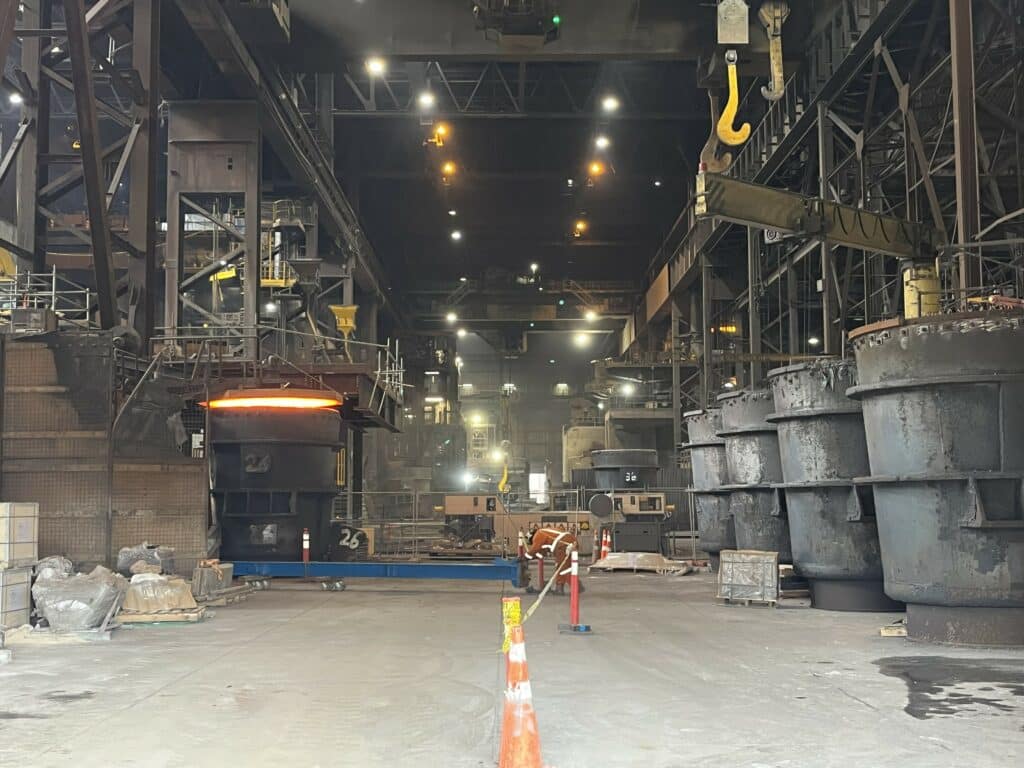
Some of our KOROK team members, including our Systems & Sustainability lead, recently visited NZ Steel’s Glenbrook site for a look behind the scenes at their game-changing Electric Arc Furnace (EAF) project.
This innovative project will replace two coal-fuelled rotary kilns at the Glenbrook steel mill, reducing NZ Steel’s carbon emissions by over 45%. The EAF will use renewable electricity and recycled scrap steel instead of coal, cutting NZ Steel’s carbon emissions by around 1 million tonnes a year – that’s about 1% of New Zealand’s total emissions!
The project, supported by the New Zealand Government through the GIDI Fund, is expected to be operational by mid-to-late 2026, marking a significant milestone in New Zealand’s decarbonisation journey.
It was great to see this innovation up close and discuss how these advancements align with our own sustainability goals at KOROK.
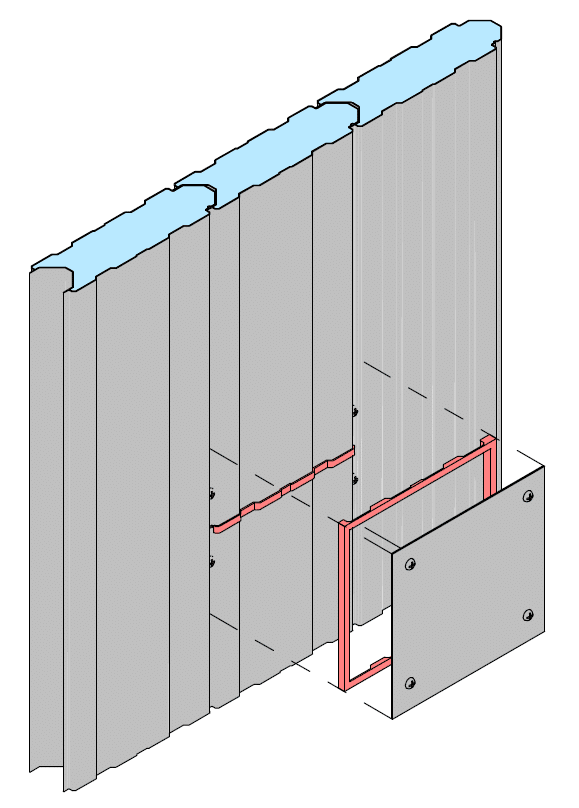
Butt joints – where two panels meet end-to-end. KOROK® provides an engineered approach so your wall performs as designed across 51 mm (60-minute) and 78 mm (120-minute) KOROK internal panel systems.
Applications
Methods (Butt Joints)
Plugging Circular Holes (≤ Ø160 mm)
For small circular openings created during installation, repairs, or services, use KOROK-tested plug details to maintain system performance.
Methods
Refer to the Detail Pack for FRR outcomes, fixing patterns, edge distances, sealant specification, and minimum spacings.