KOROK® Ceiling and Bulkhead Systems

Ceiling and Bulkhead Systems

Slide 1

KOROK® Ceiling and Bulkhead Systems

Simplifying Fire-Rated Ceiling & Bulkhead Design

A Smarter Approach to Fire-Rated Ceilings & Bulkheads

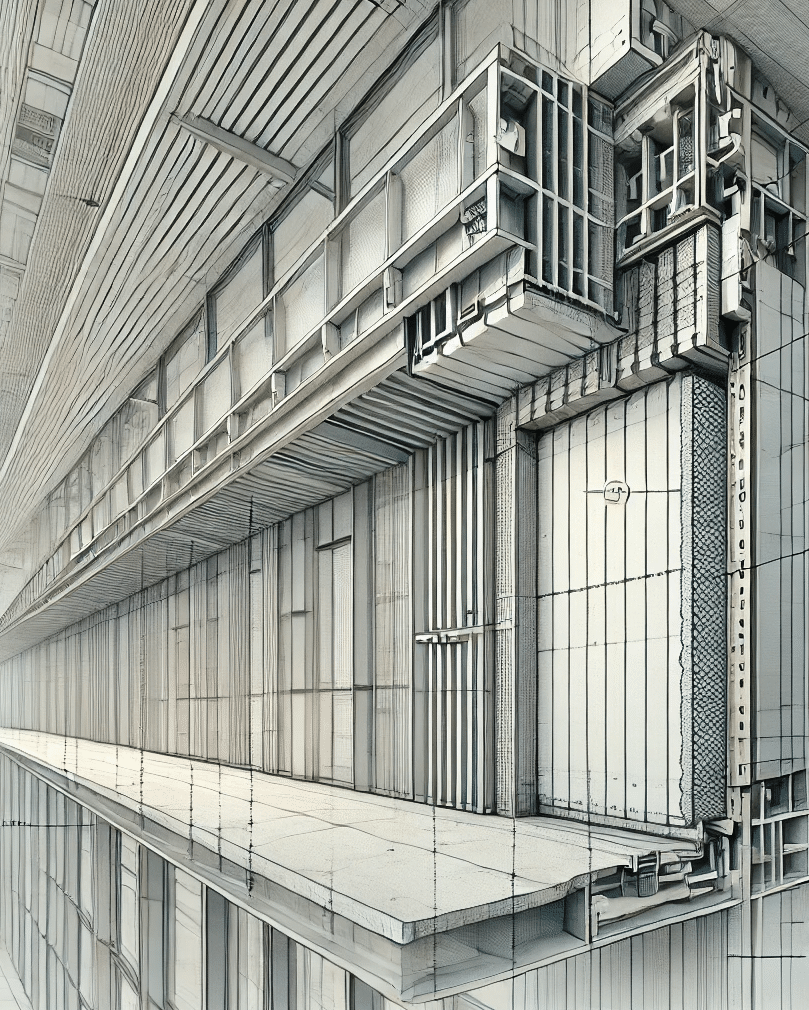
KOROK® Ceiling & Bulkhead Systems provide a smarter, more efficient approach to fire-rated ceiling construction for commercial, industrial, and infrastructure projects. Utilising KOROK® 78mm panels, these systems are designed to simplify fire continuity while enabling fast underside installation with Fire Resistance Ratings of up to -/120/120.

Developed to address the practical challenges faced on modern construction sites, KOROK® systems are ideal for service-heavy environments, restricted-access ceiling spaces, and complex construction sequencing. The lightweight panel design helps reduce installation complexity, minimise disruption to other trades, and improve overall site efficiency.

Traditional Fire-Rated Ceiling Construction Can Be Complex

Conventional fire-rated ceiling and bulkhead systems can create unnecessary challenges around ceiling plenums, service coordination, access limitations, and installation sequencing. In many cases, traditional systems require additional linings to be installed from above, increasing labour, programme time, and coordination requirements. KOROK® Ceiling & Bulkhead Systems simplify this process.

Designed specifically for installation from the underside, KOROK® systems reduce reliance on roof-space access while supporting efficient programme sequencing for new builds, retrofit projects, and staged construction works.

The symmetrical profile of the KOROK® 78mm panel allows seamless integration with KOROK® fire-rated wall systems, concrete/masonry, and structural steel elements. By utilising compatible KOROK® wall and ceiling systems together, fire continuity can be maintained without overcomplicating details or requiring excessive additional ceiling linings.

All KOROK® panel tasting has been carried out at nationally accredited laboratories to AS1530: Part 4, providing designers, engineers, and contractors with confidence in system performance and complianceKeep it simple with lightweight, code-compliant KOROK® systems designed to work together to meet demanding fire and acoustic performance requirements.
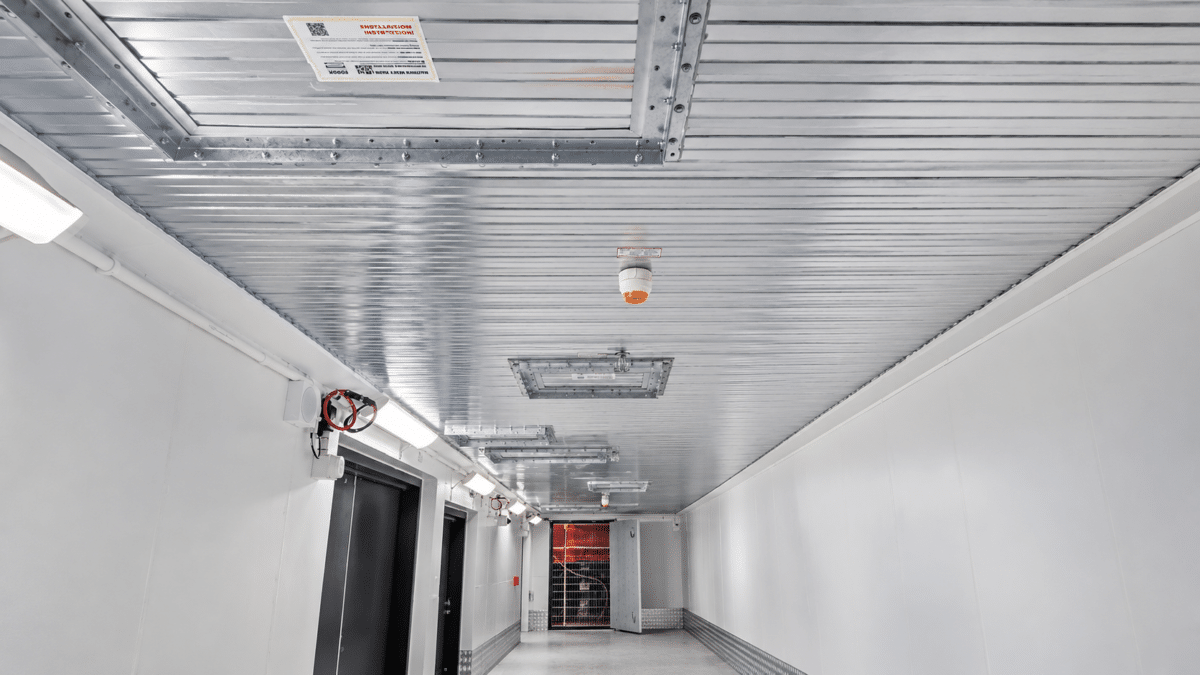
Typical Applications Include:

  • Service corridors with ducts and services
  • Riser and duct bulkheads
  • Top of lift shafts
  • Fire egress
  • Corridors and lobbies
  • Inclined ceilings under escalators and stairs
  • High fire consequence rooms
  • Plant rooms

Key Advantages

  • Underside Installation Options
  • Fire Ratings of up to -/120/120
  • Fast & Efficient Installation
  • Simplified Fire Continuity
  • Lower-Mess Construction
  • Two-Way Fire Barrier Protection
  • Flexible Design Capability
  • Additional Lining Allowance
Read more
New Fire Barrier Manual for KOROK® Wall Systems – In Partnership with RYANFIRE

New Fire Barrier Manual for KOROK® Wall Systems – In Partnership with RYANFIRE

New Fire Barrier Manual for KOROK® Wall Systems

In Partnership with RYANFIRE

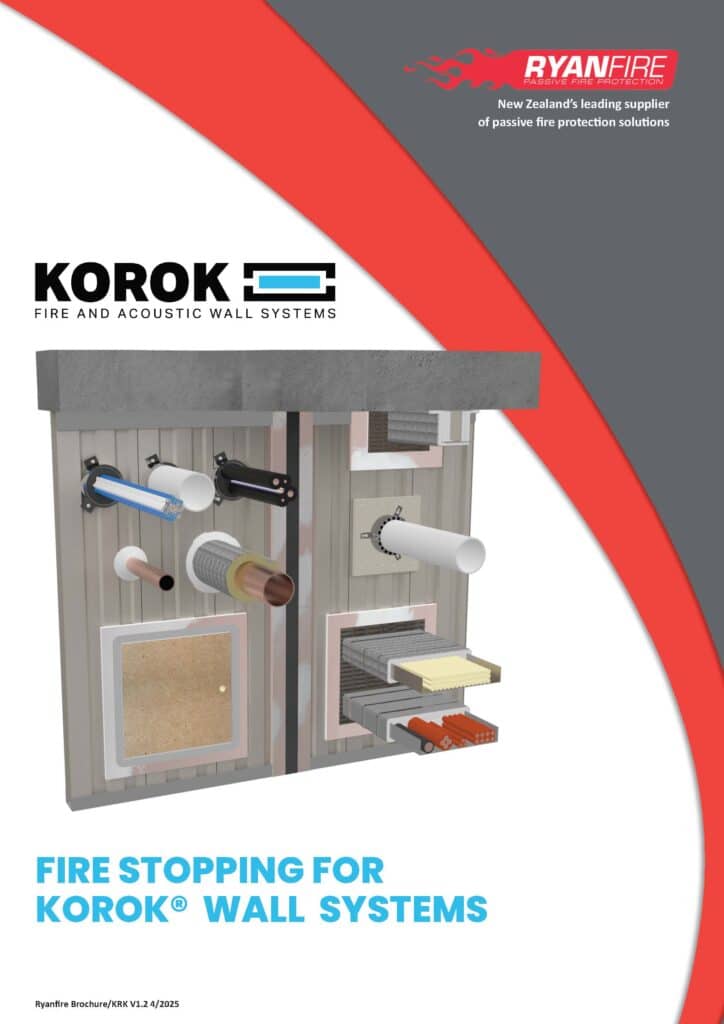
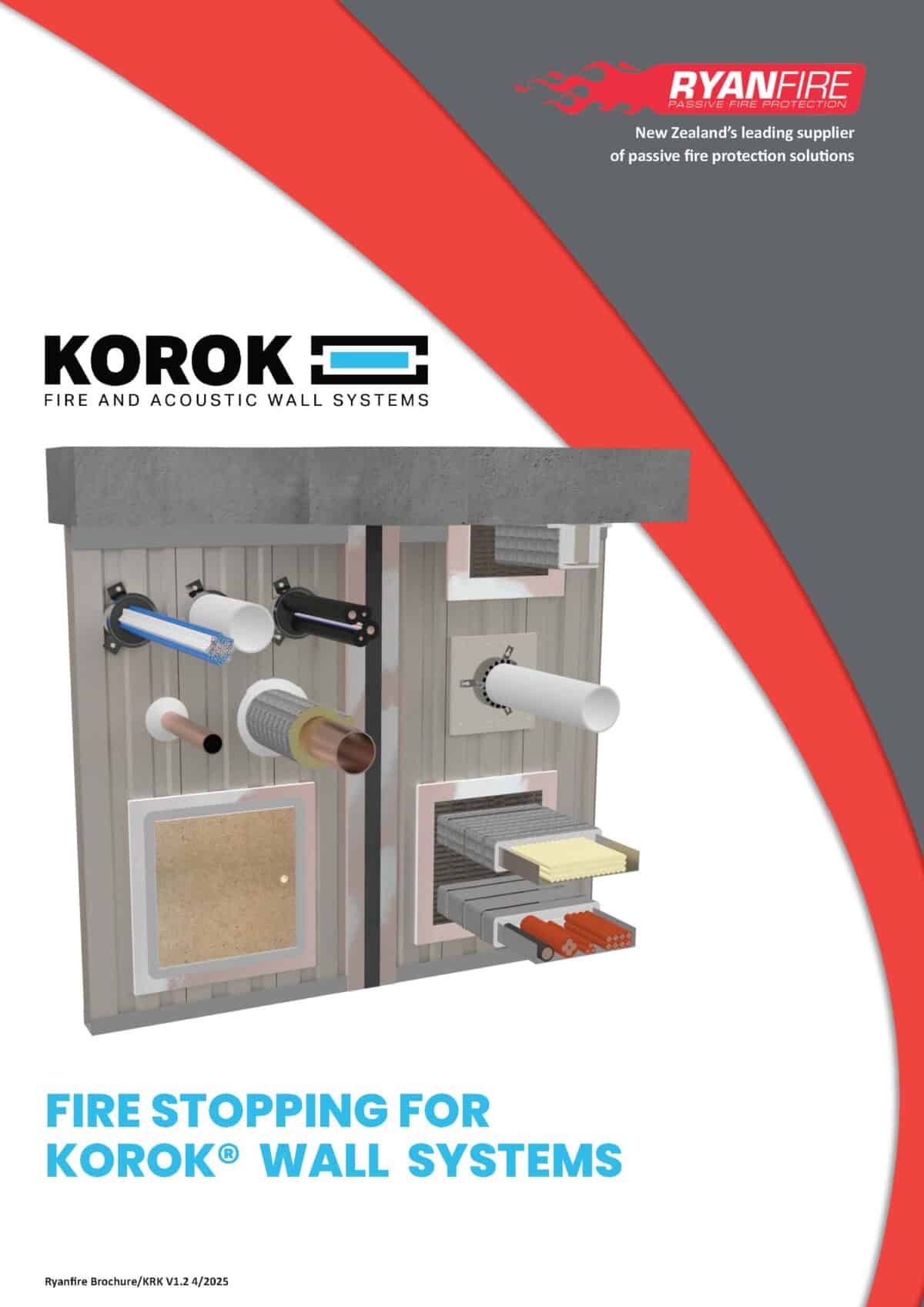
We’re excited to share a new resource designed to simplify fire-stopping with KOROK® wall systems.

In collaboration with our trusted partners at RYANFIRE, we’ve released the KOROK® Fire Barrier Manual – your go-to guide for fire-stopping penetrations in KOROK® fire-rated wall systems. 🔥 This guide aligns perfectly with the objectives outlined in the latest fire barrier documentation.

Passive fire penetrations – such as plumbing, electrical, and ductwork openings – play a crucial role in building performance, but they also pose fire risks if not handled correctly. This manual provides fully tested and compliant solutions that meet the latest NZBC requirements, with systems specifically designed and approved for use in KOROK® walls.

What’s inside:
✔️ Tested systems for passive fire penetrations
✔️ NZBC-compliant solutions
✔️ Easy-to-follow installation guidance
✔️ Developed with expert input from RYANFIRE – leaders in passive fire protection 

This is just another example of how our longstanding partnership with RYANFIRE is helping deliver smarter, more efficient fire safety on site by utilising the new manual.

📥 Download the manual now and stay compliant with confidence. Discover what the new fire barrier manual has to offer.

Recent Articles

Read more
Deflection Head Details

Deflection Head Details

Slide 1

Deflection Head Details

Structural Flexibility Without Compromise

What Are Deflection Head Details?

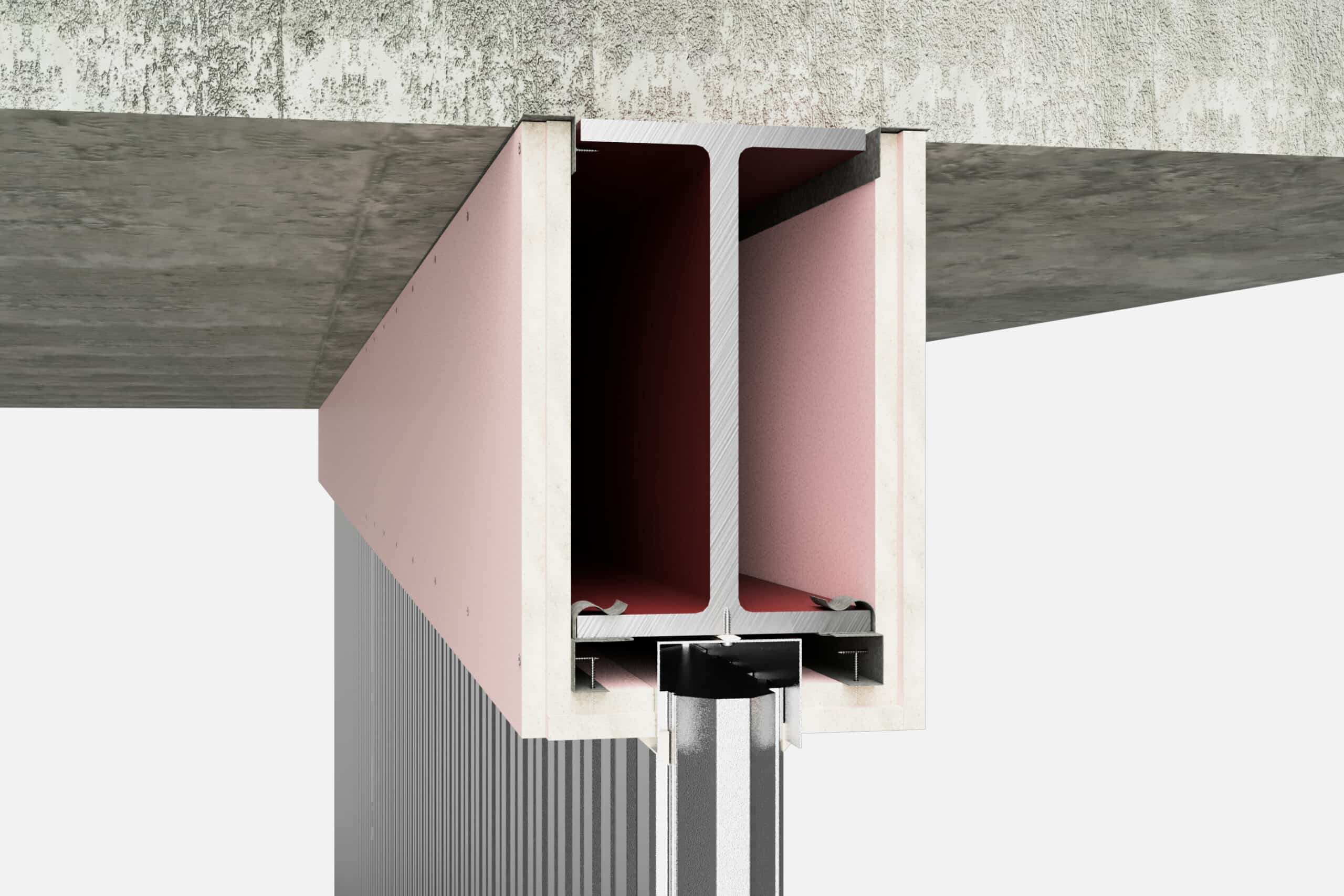
Deflection head details are specialized components used in wall and partition systems to accommodate vertical or horizontal movement in a building’s structure. They are typically placed at the top of walls, allowing the structure to expand, contract, or shift without compromising the wall’s integrity or performance.

This movement can be caused by various factors, such as dead loads, live loads, thermal expansion, or seismic activity. At KOROK Building Systems, our deflection head solutions are designed to provide the flexibility and stability needed in high-performance wall systems.

KOROK deflection head details:

  • Maintain Structural Integrity: Designed to allow movement in walls without damaging the structure, these details help prevent cracking or separation in response to building movement.
  • Ensure Fire and Acoustic Performance: KOROK deflection heads are rigorously tested to retain fire resistance and acoustic ratings, even with movement, maintaining protection in all conditions.
  • Seismic Readiness: In New Zealand, where seismic activity can impact building structures, our deflection head designs are engineered to absorb and adjust to seismic forces, supporting safe and resilient structures.

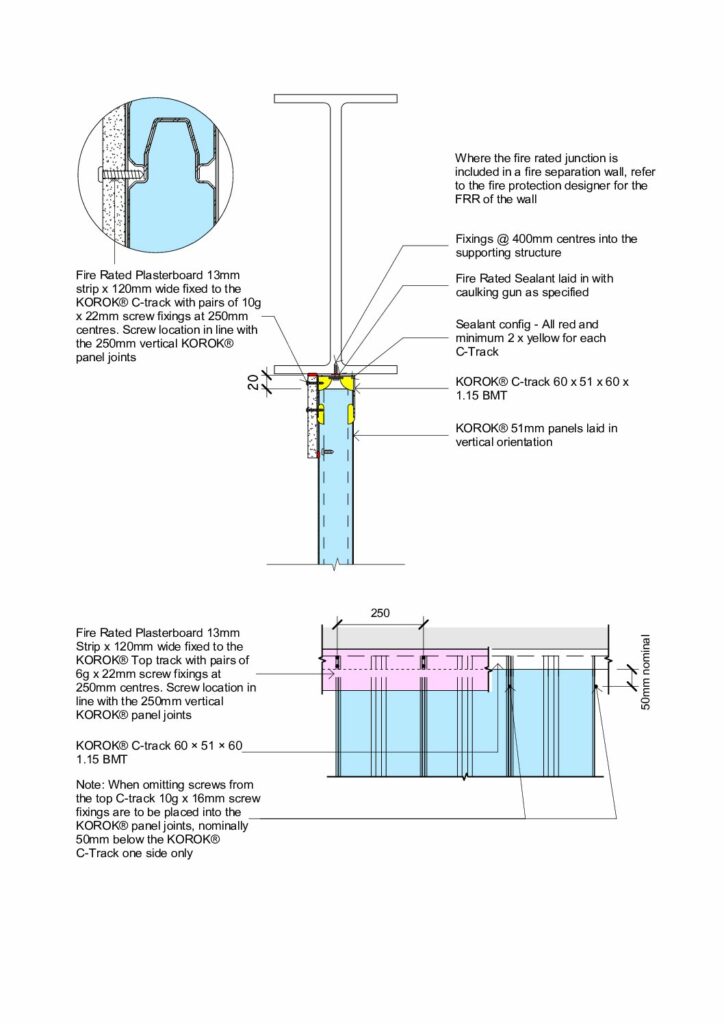
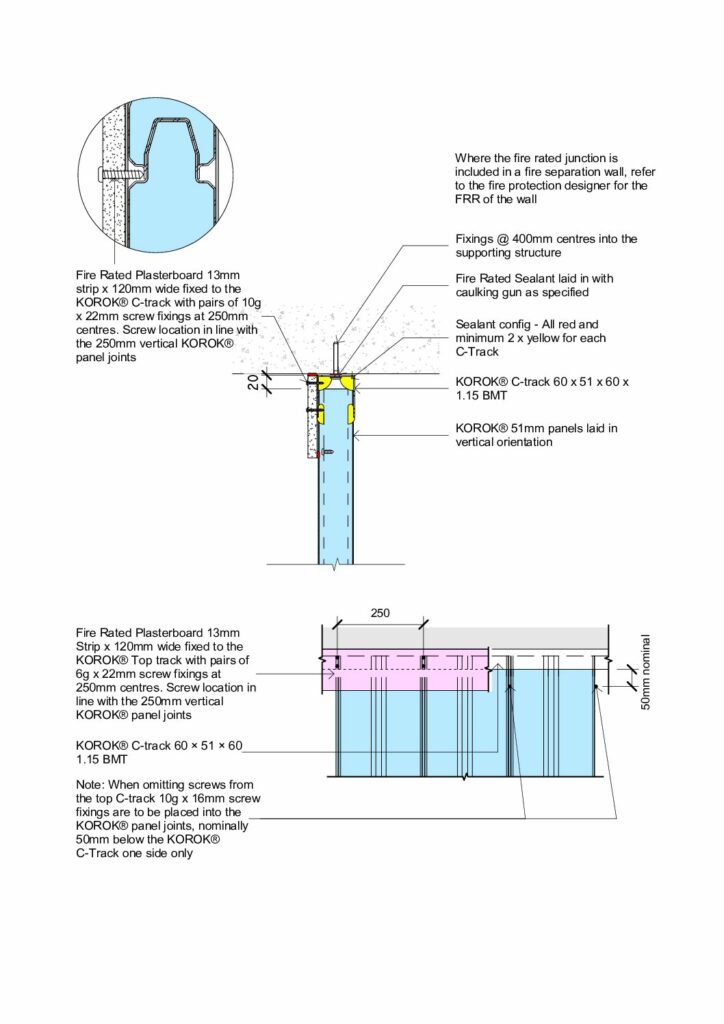
Dead and live loads can cause significant deflection in some structures. KOROK® can provide deflection C-track details where deflection loadings are considered.

Whether used in commercial or residential projects, KOROK’s deflection head details meet the highest industry standards, offering a reliable solution for builders, architects, and contractors who prioritize safety, performance, and durability.

Read more