1. NZ Steel’s Electric Furnace Transition
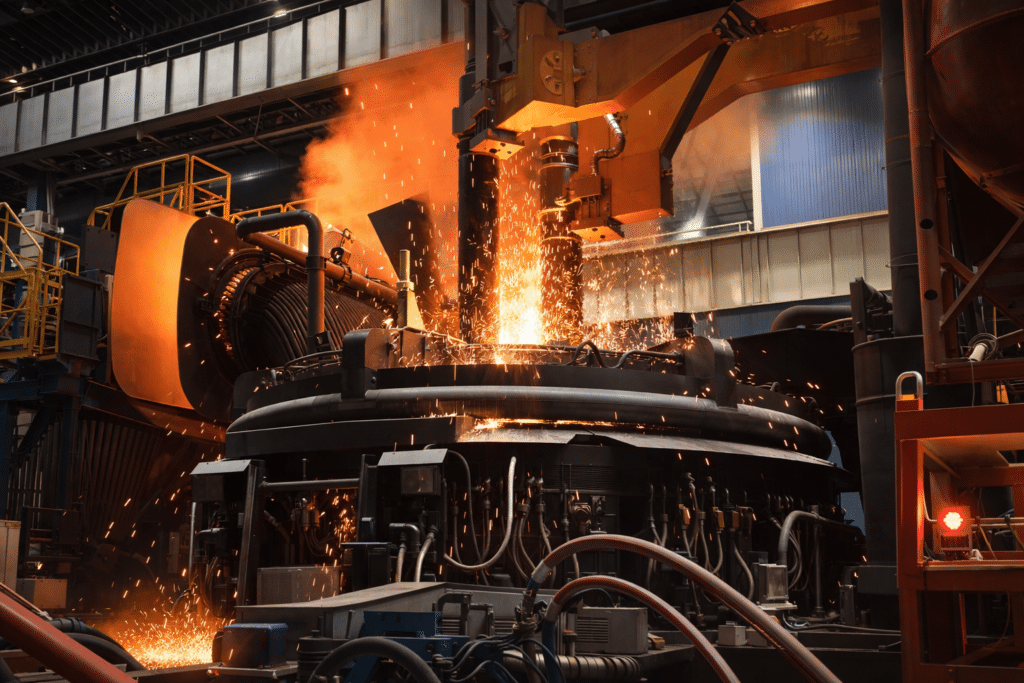
NZ Steel is commissioning a new Electric Arc Furnace (EAF) to replace the current coal‑based steelmaking process. This technology significantly reduces emissions because it uses electricity rather than coal as the primary energy source. Commissioning is expected to be complete by the end of 2026.
The change is expected to reduce the carbon footprint of NZ‑made steel by around 50%. Since the steel component represents the majority of the embodied carbon in KOROK® panels, this will dramatically reduce the carbon footprint of our product without any change to product performance or specification.
2. Steel as a Circular Material
Steel is one of the most recyclable materials used in construction. It can be recycled indefinitely without loss of quality or structural performance.
This means the steel used in KOROK® panels can be recovered and reused repeatedly, supporting circular economy principles and reducing demand for new raw materials.
3. Durability and Longevity
The primary materials used in KOROK® panels—steel and concrete—are both known for their durability and long service life.
Concrete structures can last for many decades and often well over a century. Steel maintains its structural properties over time and can be recycled at the end of a building’s life. Because KOROK® panels are made from these long‑lasting materials, they contribute to buildings that require fewer replacements and less material use over time.
4. Deconstruction and Reuse
KOROK® panels can also be deconstructed and reconstructed rather than simply demolished. This allows materials to be reused in future building projects.
Designing buildings with components that can be reused helps reduce construction waste and extends the lifecycle of building materials.
5. Performance as a Sustainability Factor
Sustainability is not only about reducing carbon emissions—it is also about ensuring products perform reliably throughout the life of a building.
KOROK® panels are widely used because they provide exceptional fire and acoustic performance. Products that protect buildings from fire and control noise for decades without needing replacement contribute strongly to long‑term sustainable construction.